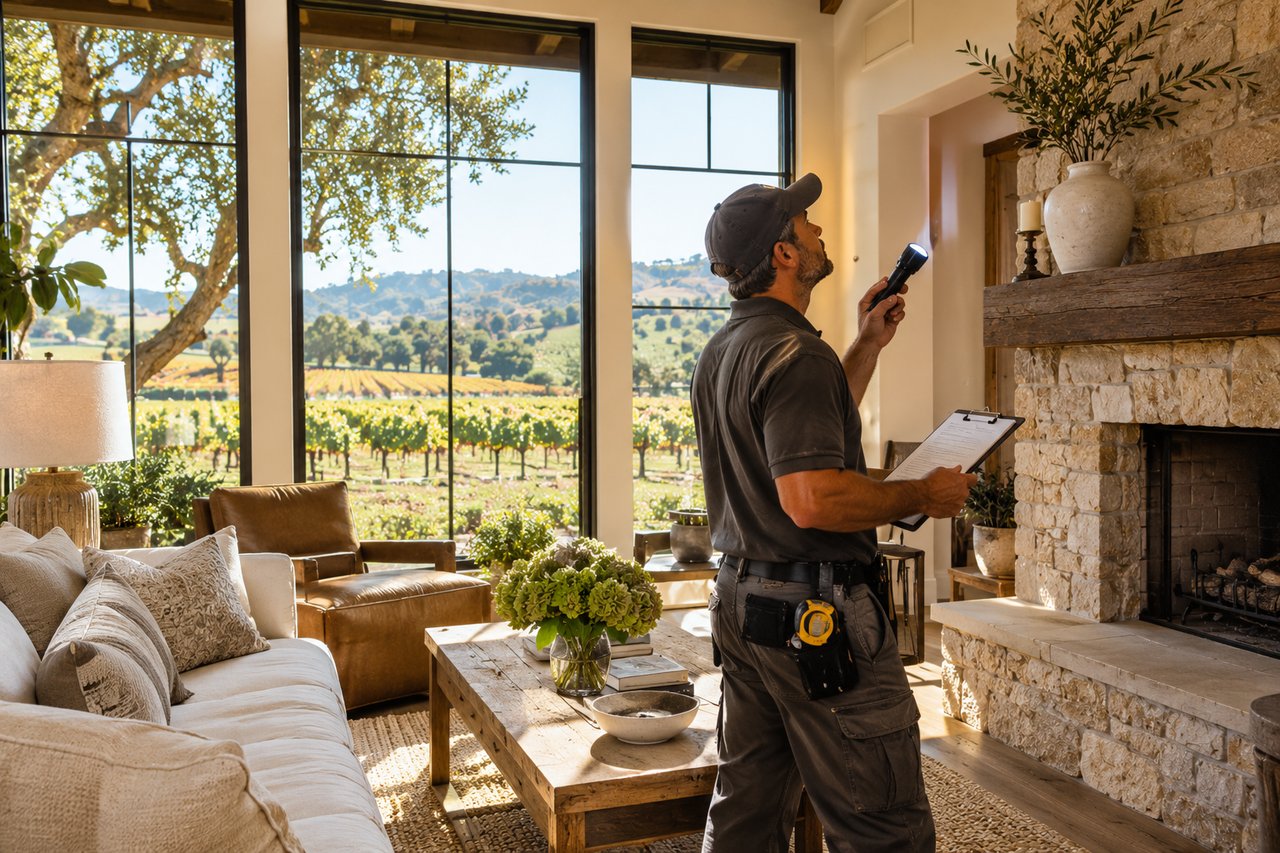
What to Expect During a Home Inspection in Napa Valley: A Guide for Buyers and Sellers
BLOG November 11, 2026
BLOG November 11, 2026
A home inspection is the moment a property stops being a feeling and starts being a set of facts. For buyers, it is the chance to understand exactly what they are about to own. For sellers, it is the moment the home is looked at with fresh, very thorough eyes. In Napa Valley, where homes range from historic Victorians and mid century classics to hillside retreats and vineyard estates, no two inspections look quite alike.
Whether you are buying or selling, knowing what to expect takes a lot of the stress out of this stage. Here is how I walk my clients through it.
Most offers in Napa Valley include an inspection contingency period, and the length differs from contract to contract. During that window, you can have the home professionally evaluated and decide how to move forward based on what is found.
A general inspection covers the major systems and structure of the home, including the roof, foundation, plumbing, electrical, heating and cooling, and overall condition. Depending on the property, you may also want specialists for the pest inspection, the roof, the chimney, or the HVAC system. If you are looking at a property outside city limits, septic and well inspections become essential.
I always encourage buyers to attend the inspection in person if they can. Walking the home with the inspector, asking questions, and seeing issues firsthand is far more valuable than reading about them later. The report that follows can run long, and that is normal. A thorough report is not a verdict on the home. It is a roadmap.
The key is learning to sort what you read. Safety concerns, structural questions, water intrusion, and aging major systems deserve your closest attention. Cosmetic wear and routine maintenance items are usually part of owning any home. Napa Valley adds a few of its own considerations worth raising with your inspector, such as foundation condition on older homes, drainage on hillside lots, roof age, and the seismic details of the property. For homes near wildland areas, defensible space and fire resistant features are worth understanding too.
Once the findings are in, you generally have a few paths. You can move forward as is, ask the seller for repairs or a credit, renegotiate the price, or, within your contingency period, decide the property is not the right fit. I help my buyers weigh each finding so they are responding to what truly matters rather than reacting to every line item.
If you are selling, the inspection is simply part of the process, and the sellers who feel best about it are the ones who prepared.
Start with the easy wins. Make sure the inspector can reach the attic, crawl space, electrical panel, water heater, and any outbuildings without obstacles. Keep utilities on, replace burned out bulbs, and take care of small repairs like leaky faucets, loose handrails, and sticking doors. Small items add up in a report, and handling them in advance keeps the focus on the home’s strengths.
It also helps to gather records. Receipts for roof work, HVAC servicing, remodels, and permits show buyers that the home has been cared for, and they can answer questions before they turn into concerns.
Most sellers choose to have an inspection done before listing. This can be a smart way to learn what a buyer’s inspector is likely to find, so you can decide what to fix, what to disclose, and how to price with full information, or to keep negotiations short and upfront. Keep in mind that anything an inspection uncovers becomes known information, which matters for your disclosures. I will help you think that through so you are protected.
When repair requests arrive, remember that you are not obligated to fix everything on a buyer’s list. Your options usually include making the repairs, offering a credit, adjusting the price, or declining. Each has trade offs, and the right choice depends on the findings, the market, and the buyer’s overall position. A calm, strategic response based in knowledge keeps the transaction moving.
A good inspection protects both sides. Buyers gain confidence in what they are purchasing. Sellers gain clarity, upfront negotiation and a smoother path to closing. When both parties communicate openly and respond to findings with perspective, most inspections lead to a successful sale rather than a stalled one.
Having someone beside you who knows Napa Valley homes, local inspectors, and trusted contractors makes a real difference during these few days. I work with a network of trusted professionals and keep a close eye on the timeline, so nothing gets missed while the clock is running.
Whether you are about to write an offer or getting ready to list, I would love to talk through what the inspection process could look like for your specific home. Reach out anytime and we will map it out together at TracyWarrCo.com.
Tracy Warr | Napa Valley & Sonoma Real Estate Specialist
Coldwell Banker Global Luxury® | Coldwell Banker Brokers of the Valley
707.287.1994 | [email protected] | TracyWarrCo.com
DRE #01443203
Stay up to date on the latest real estate trends.
BLOG
What inspectors look at, how to read the report, and how to handle repairs and negotiations with confidence, whichever side of the table you are on
BLOG
How to use current conditions to protect your budget, your timeline, and your peace of mind

Inside the Judgment of Napa, created by Cultured Vine and held at Freemark Abbey, where the people who lived the 1976 tasting gathered and the results made history all… Read more

The coverage question that can make or break a wine country transaction, and why it deserves attention long before you reach the closing table
BLOG
While the vineyards turn gold and the crush begins, the market quietly opens a window most buyers and sellers overlook

BLOG
The due diligence checklist for buyers falling in love with rural wine country land

BLOG
From a St. Helena kitchen producing Bocuse d'Or champions to a wave of ambitious new restaurants, wine country's culinary scene is having a defining year.

Why the San Francisco AI boom, more room to negotiate, and wine country's staying power point to a smart window for buyers

BLOG
A clear guide to what is required, what is recommended, and how to protect your transaction
Etiam non quam lacus suspendisse faucibus interdum. Orci ac auctor augue mauris augue neque. Bibendum at varius vel pharetra. Viverra orci sagittis eu volutpat.